Home office and library design: shelving, desks, light and acoustics
How to design a home office or library in a villa: shelf depths and spans, desk sizes, daylight and task lighting, acoustics for video calls and cable routes.
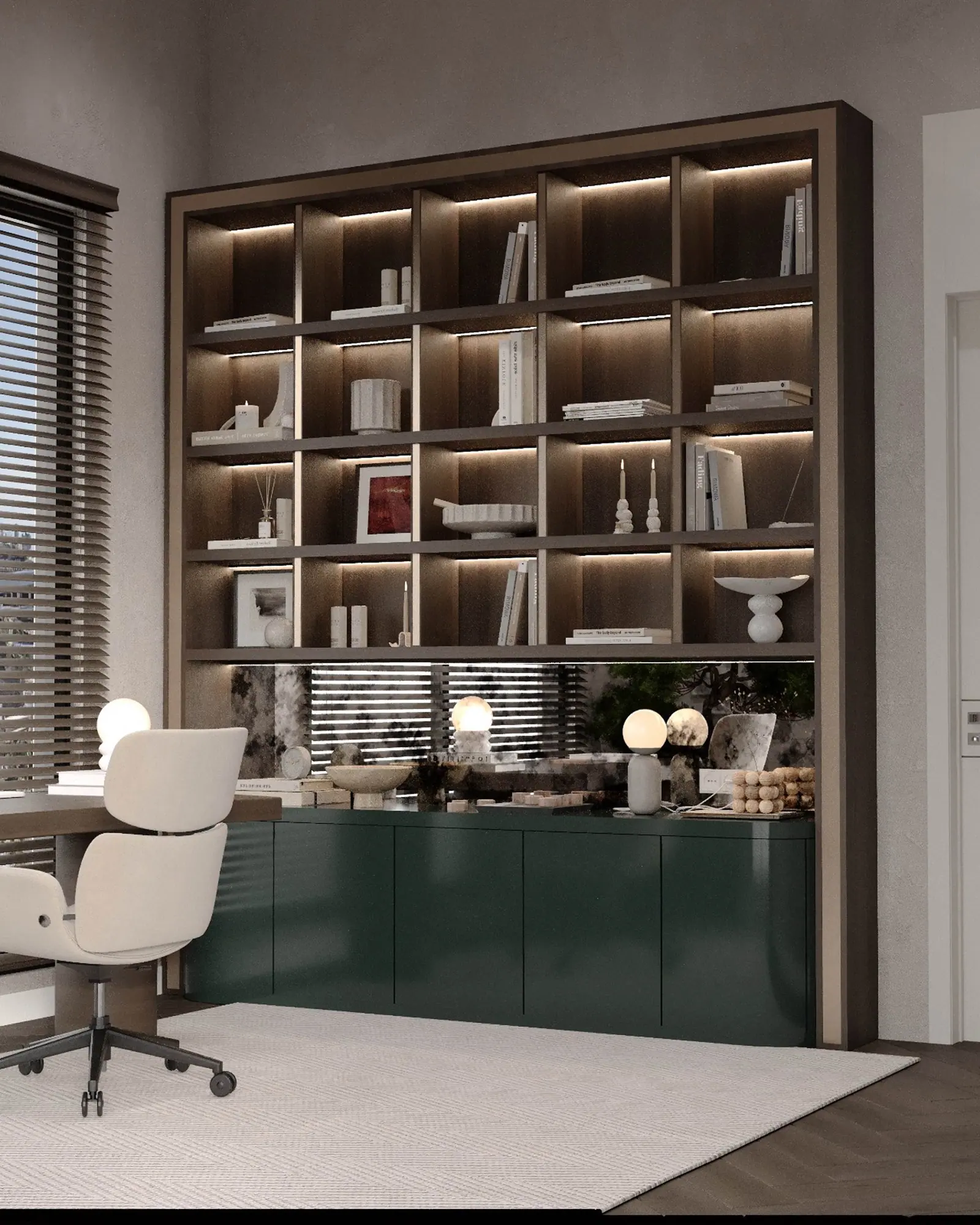
A home office has become a permanent room in many villas, and a library wall is often part of it. The two share the same design questions: how to store a lot of things neatly, how to light a desk well and how to make a room that is pleasant for concentrated work and for video calls. With built-in joinery, a study can become one of the most characterful rooms in the house.
Position and daylight
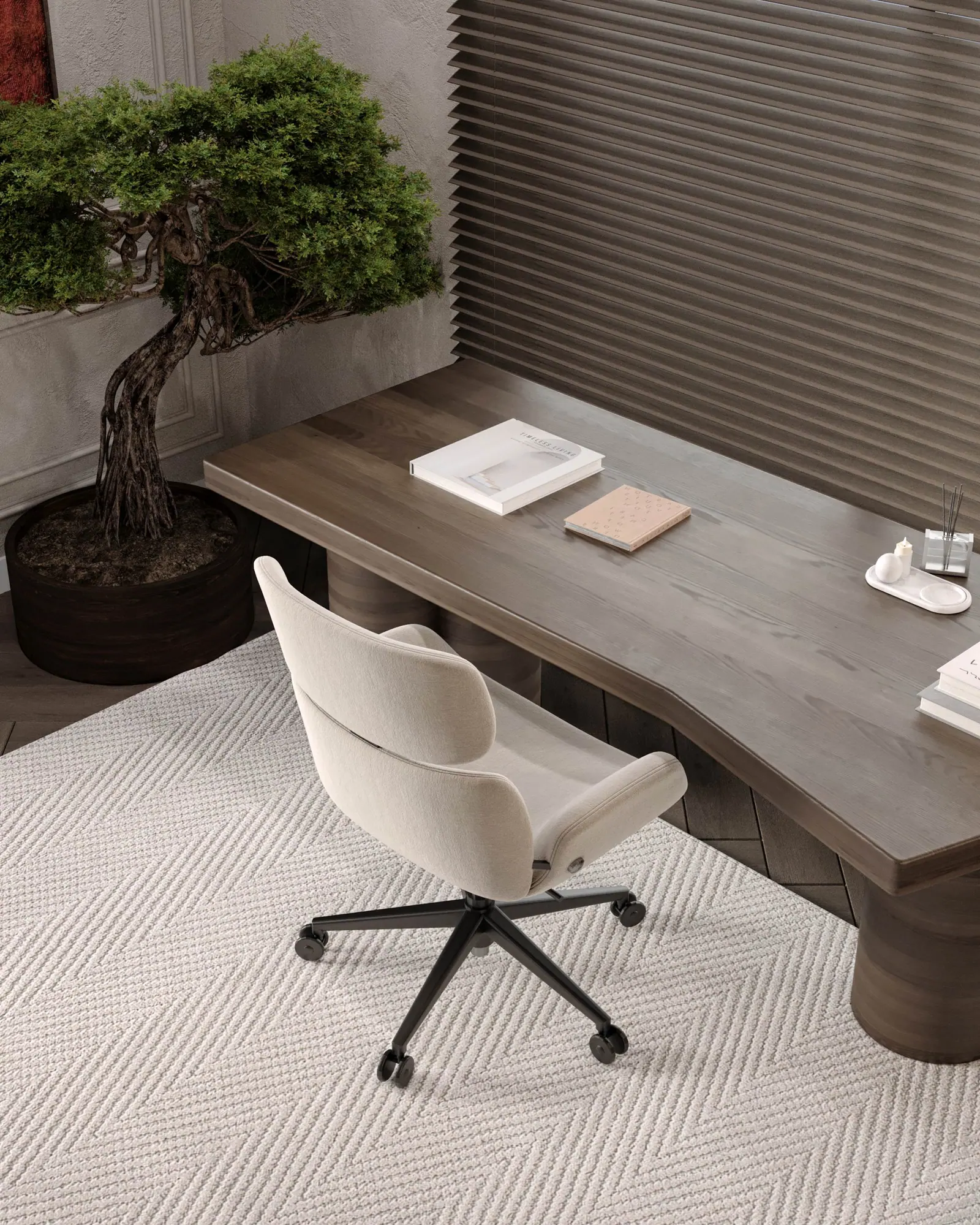
Choose a room with daylight, away from the busiest part of the house. Place the desk so the window is to the side, which avoids glare on the screen and shadows on the desk. For video calls, a desk facing into the room with shelving behind you gives a calm, attractive background and even light on your face.
Desk dimensions
| Element | Recommended |
|---|---|
| Desk depth | 70 – 80 cm |
| Desk width, single screen | 140 – 160 cm |
| Desk width, two screens | 180 – 200 cm |
| Desk height | 72 – 75 cm (or height-adjustable) |
| Space behind the chair | at least 100 cm |
A built-in desk along a wall can run the full width of the room and integrate drawers, a printer cupboard and cable trays.
Library shelving
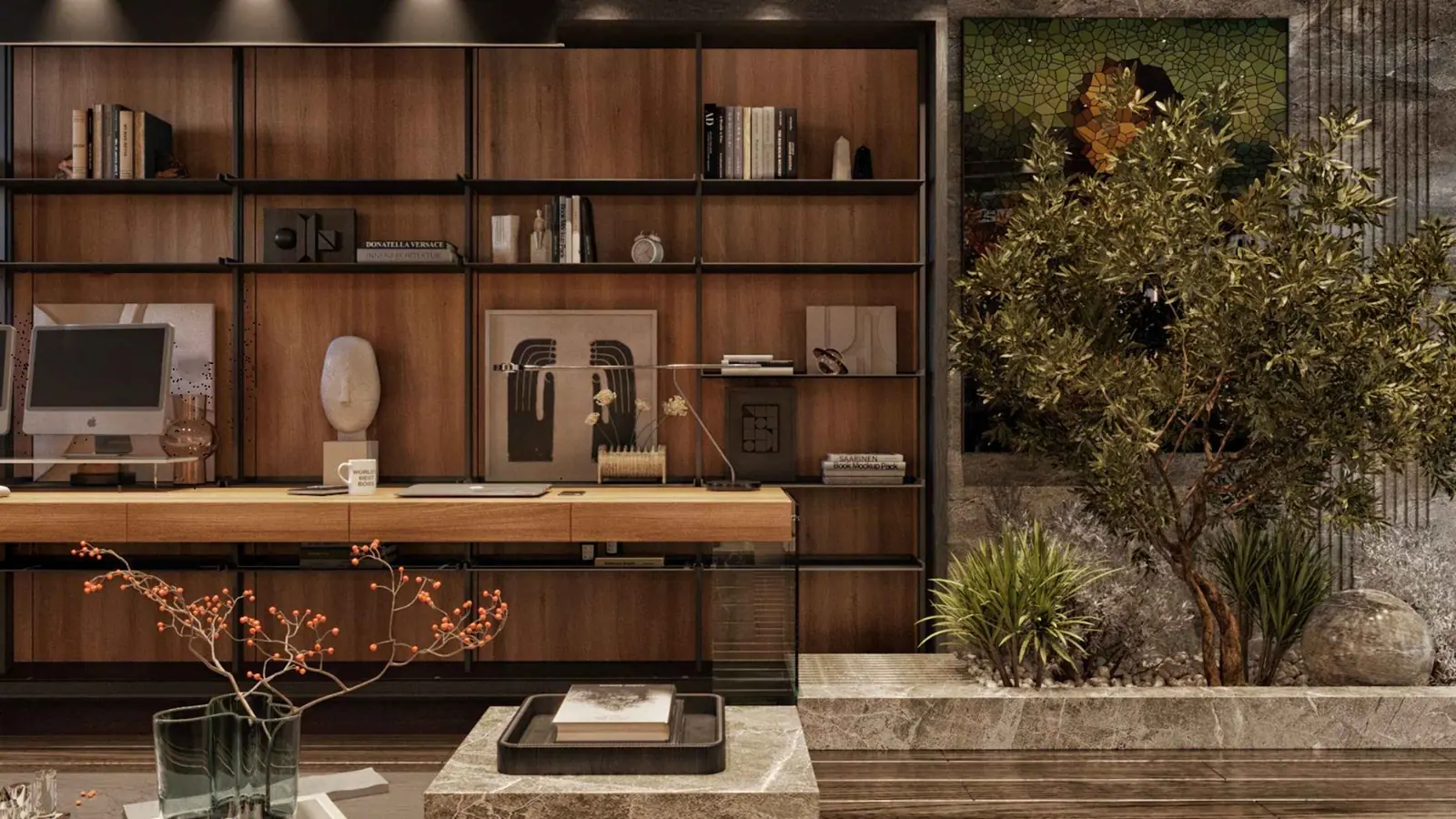
- Depth: 25–30 cm for books, 35–40 cm for large volumes and files.
- Shelf height: 30–35 cm for most books, 40 cm or more for large formats.
- Span: 80–90 cm for standard board, longer with solid timber or hidden steel.
- Base: closed cabinets 40–45 cm deep for files, printers and things you don't want on display.
- Height: full height to the ceiling with a rail and ladder in double-height rooms.
Adjustable shelves add flexibility, but a few fixed shelves help the structure. Integrated lighting in the shelves, either vertical strips in the sides or small lights under each shelf, turns a library wall into a feature.
Lighting
- Ambient: soft general light, ideally indirect from a cove or uplighters.
- Task: a good desk lamp or a linear light above the desk, around 500 lux on the work surface.
- Accent: shelf lighting and a wall washer on the library.
- Face light for calls: soft light from in front of you, not a bright window behind.
Keep the colour temperature around 3000–3500 K for a warm but focused atmosphere.
Acoustics
Hard, empty rooms echo, which makes video calls tiring for everyone. Full bookshelves are one of the best sound absorbers there is. Add a rug, curtains, an upholstered chair or an acoustic panel behind the screen. A solid door with seals keeps household noise out.
Cables and technology
Plan power and data points at desk height, a cable tray under the desk and a grommet for monitors. A wired network connection is still the most reliable for calls. Hide routers and printers in ventilated cupboards and allow space for charging equipment.
Making it a room, not a corner
- Separate the office from bedrooms and living spaces if you work long hours.
- Give it one richer material, such as timber panelling or a coloured shelving unit.
- Include a comfortable reading chair with a lamp.
- Keep a closed cupboard for paperwork so the desk can be cleared.
For joinery design and production, see custom-made furniture. Timber panelling and shelving ideas are covered in timber slat walls, and lighting control in lighting control and smart home.
Frequently asked questions
How deep should library shelves be?
For most books, 25-30 cm is enough. Art books and large-format volumes need 35-40 cm. Lower cabinets with doors are usually 40-45 cm deep and can double as a surface for display.
Where should the desk face in a home office?
Ideally with daylight coming from the side, not directly behind or in front of the screen, to avoid glare and backlighting on video calls. Facing the room, with a calm wall or shelving behind you, works best for calls.
How do I stop shelves from sagging?
Keep spans short: around 80-90 cm for 18-25 mm board, up to about 100 cm with thicker or reinforced shelves. Solid timber, a stiffening front edge or a hidden steel profile allow longer spans.