Custom-made furniture: process, materials and what to watch for
How made-to-measure furniture is produced: carcass materials, door finishes, hardware quality and the most common mistakes when measurements are taken.
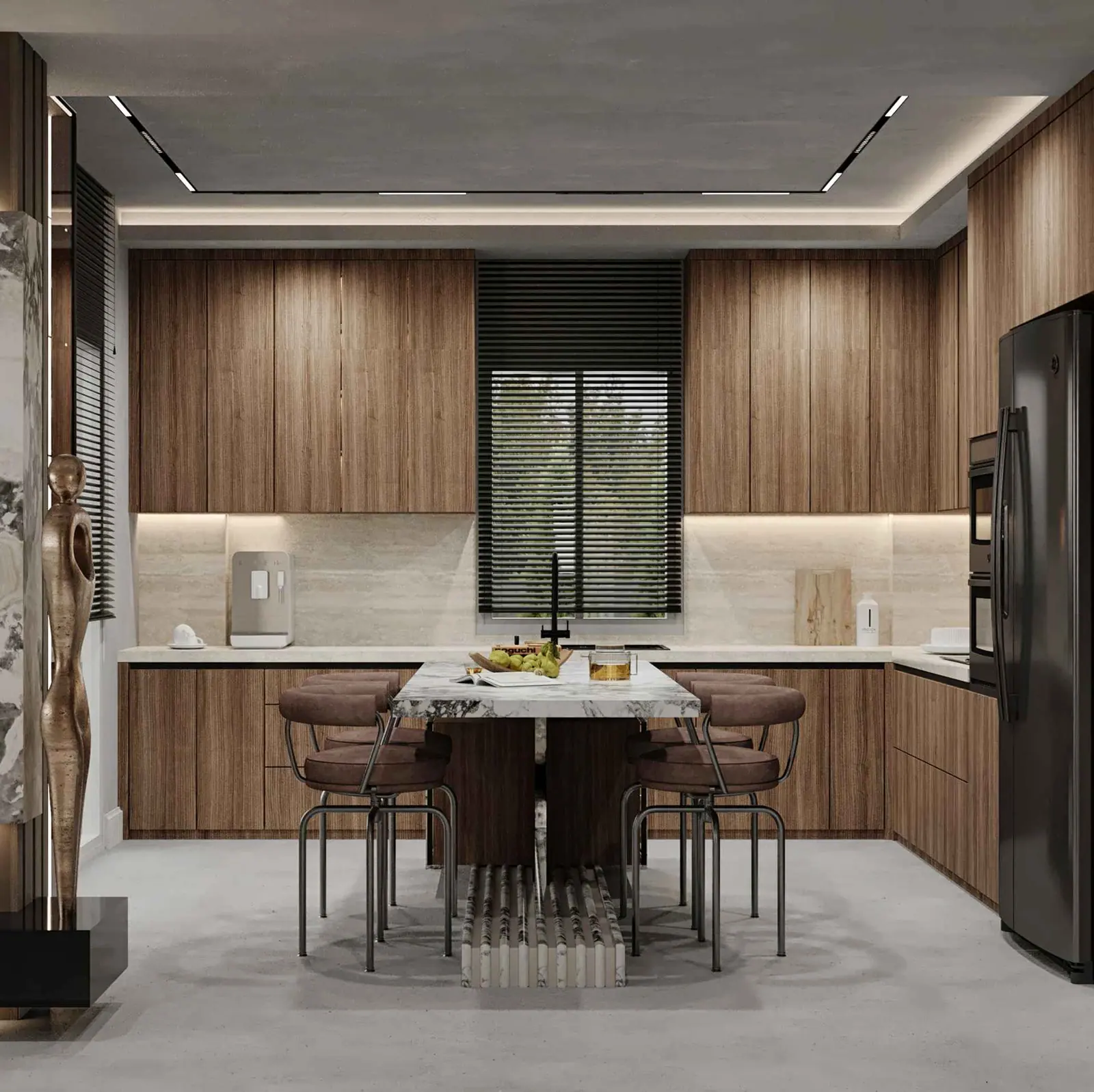
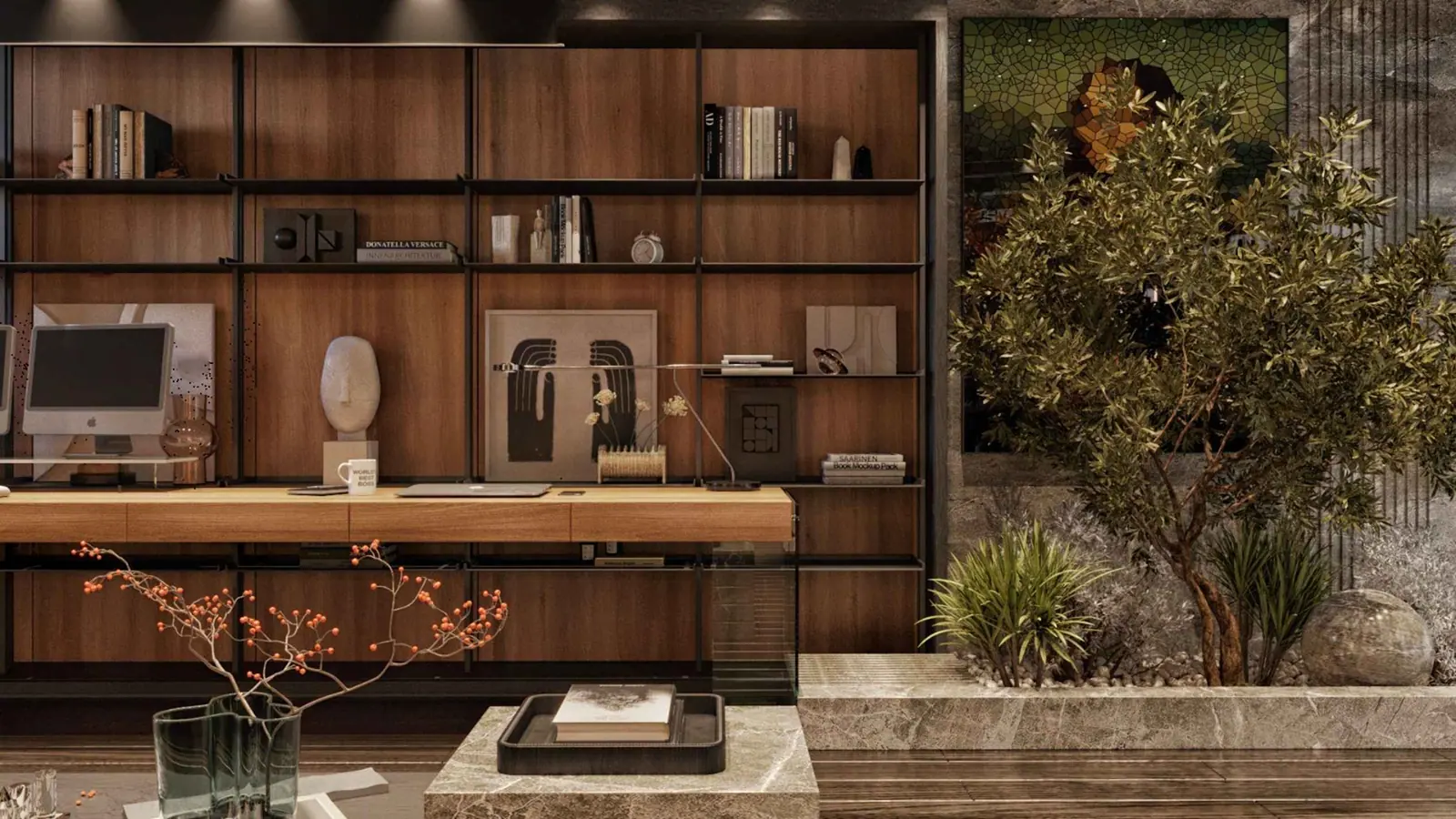
In villas and large homes, much of the furniture is made to measure. The reason is not only aesthetic: in rooms where walls are not perfectly square, columns stand out of the plan and ceiling heights are non-standard, ready-made furniture always leaves gaps.
Done well, custom joinery gives more storage in the same space, a seamless fit against the wall and a solution specific to the room. Done badly, it becomes expensive and late.
How the process works
1. Defining needs. Nothing can be drawn before you know what will be stored. How many metres of hanging, how many drawers, what size items? Skip this step and you get a beautiful but inadequate wardrobe.
2. Concept and drawings. Elevations, door layout, materials and colours. 3D visualisation comes in here and is used for sign-off before production.
3. Site measurement. After rough works and plastering, before painting. Wall angles, level differences and any service projections are measured. A good survey measures each wall at several points; walls are never parallel.
4. Technical drawings and cutting list. Production drawings are revised to the site measurements and a parts list is prepared.
5. Workshop production. Cutting, edge banding, drilling and pre-assembly. Depending on scope, this takes two to five weeks.
6. Installation. Delivery, assembly, levelling and door adjustment. A good installation leaves no visible joints where the joinery meets the wall.
7. Final adjustment. Door alignment, soft-close drawers and hinge settings. This should be repeated a few weeks after handover, as timber-based materials move slightly with humidity.
Material decisions
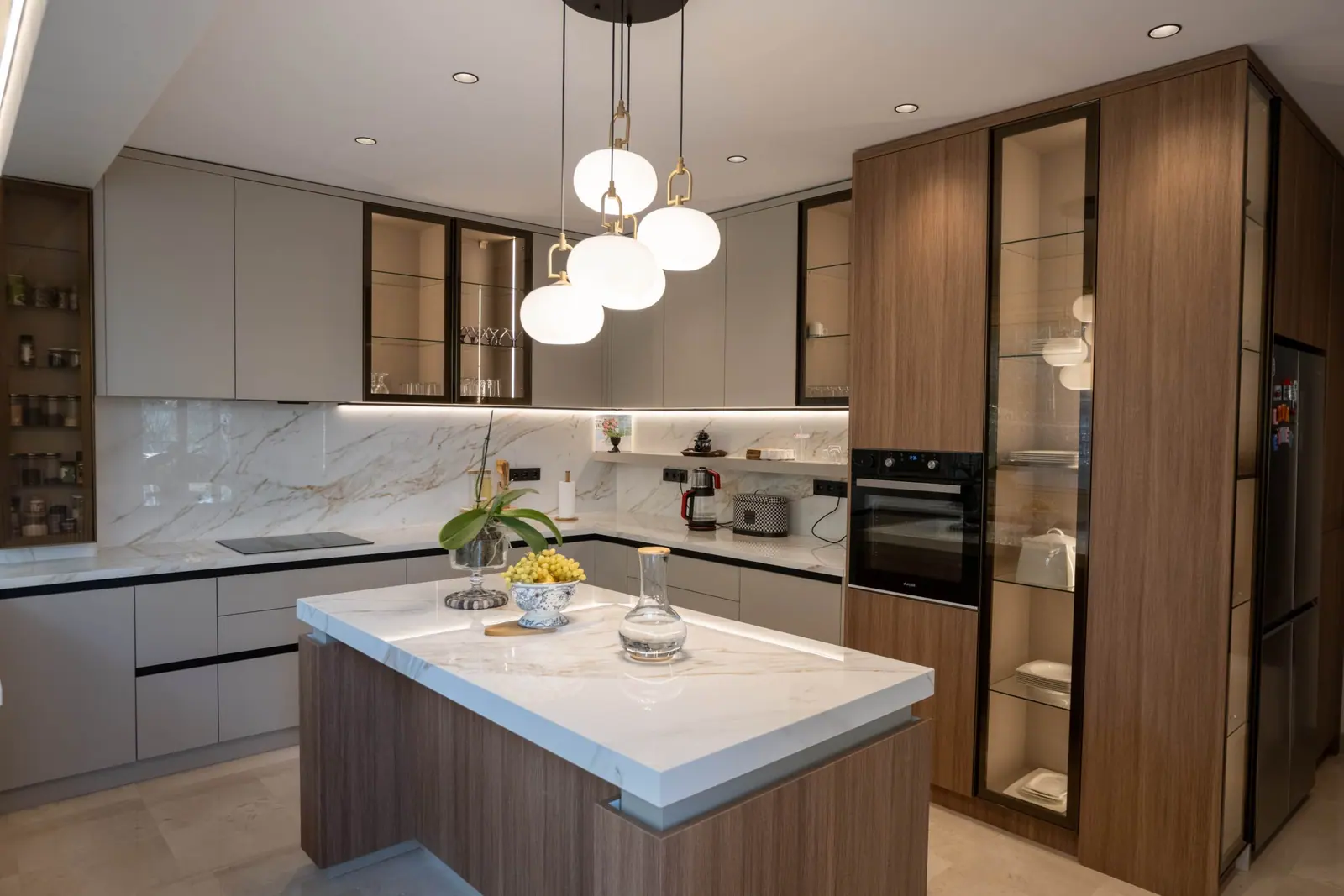
Carcass. The structural frame of the cabinet. Good particleboard is enough in dry rooms; moisture-resistant board or MDF is preferred in damp areas. 18 mm is the standard thickness; wide shelves need thicker material or an intermediate support to avoid sagging.
Doors and fronts. The visible surface, with plenty of options:
| Finish | Strength | Watch out for |
|---|---|---|
| Lacquer (matt/gloss) | Seamless surface, any colour | Scratches and dents show |
| Natural wood veneer | Grain and character | Veneer should match from the same batch |
| Melamine / laminate | Durability, cost | Edge banding quality is decisive |
| Glass / mirror | Lightness, reflects light | Fingerprints and cleaning |
Hardware. Hinges, drawer runners and lift systems decide how the furniture feels every day. Good hardware runs quietly, closes softly and stays adjusted for years. The carcass and the hardware are the two hardest parts to replace later.
Edge banding. An overlooked detail that decides lifespan. Well-applied banding keeps moisture out; poorly applied banding lifts at the edges and lets the board swell.
Common mistakes
- Measuring too early. Measurements taken before plastering are off by a few centimetres and cause problems at installation.
- Ignoring skirting and cornices. The wardrobe cannot sit flush against the wall until existing skirting is removed.
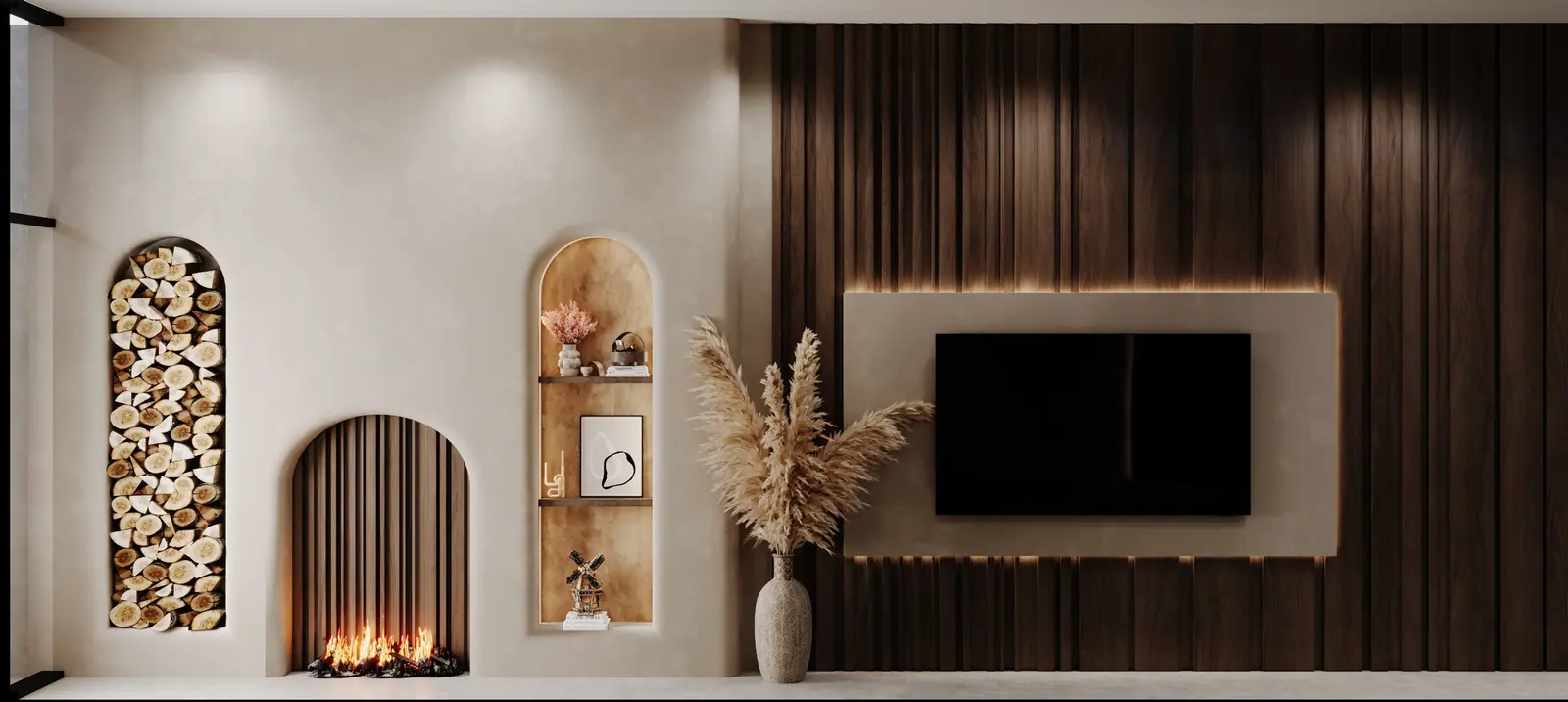
- Forgetting the electrics. Cabinet lighting, an iron socket or cable routes behind a TV unit need to be planned at the wiring stage.
- One wide door. Doors wider than 60 cm put too much load on the hinges and sag over time.
- No ventilation gap. Cabinets against external walls without a gap behind them are at higher risk of mould.
- No adjustment after handover. Timber-based materials settle; a follow-up adjustment a few weeks later should be standard.
Pre-order checklist
- Has everything that will go inside been listed?
- Have the elevations and door layout been approved?
- Were material samples seen in the room's own light?
- Are the hardware brand and grade written into the contract?
- Are the power points planned?
- Do production and installation dates fit the overall project schedule?
When all six points are settled before ordering, the chance of surprises between production and installation drops considerably.
For dressing room measurements, see walk-in closet dimensions.
Frequently asked questions
How much more does custom furniture cost than ready-made?
Comparing price alone is misleading. Made-to-measure joinery leaves no gaps along the wall, so it holds noticeably more in the same space. Measured as storage per square metre, the difference shrinks considerably.
What should the carcass be made of?
Good-quality particleboard is fine in dry areas. Kitchens, bathrooms and anywhere with a risk of moisture call for moisture-resistant board or MDF of the right thickness. The carcass cannot be replaced later, so it is not the place to save money.
When should measurements be taken?
After the rough works and plastering are finished, but before the final coat of paint. Measuring too early misses the plaster thickness; measuring too late squeezes production into the delivery date.