Marble in interiors: choosing, finishing and living with natural stone
How to use marble in a villa: choosing stone and slabs, polished vs honed finishes, where marble works and where it does not, sealing and book-matching.

Turkey is one of the world's great marble producers, and it shows in Istanbul's villas: marble floors, fireplace walls, bathroom slabs and kitchen islands are everywhere. Used well, marble gives a house depth, light and a sense of permanence that no other material can match. Used without understanding its nature, it can stain, etch and disappoint. The key is to choose the right stone for each place and to accept that natural stone lives and changes.
Understanding marble
Marble is a metamorphic stone composed mostly of calcite. That gives it its translucency and softness, and also its sensitivity to acids. Stones differ widely in density, porosity and veining. Turkish marbles range from white and cream stones to dramatic dark and coloured varieties, each with different strengths.
Choosing the slabs
Every slab is different, so never choose from a small sample alone:
- Visit the stone yard or ask for photos of the actual slabs, with a tape measure for scale.
- Reserve all slabs for one area from the same block, so colour and veining match.
- Plan the layout on the slabs before cutting, especially for feature walls and islands.
- Mark which slab goes where and in which orientation.
Finishes
| Finish | Look | Best for |
|---|---|---|
| Polished | Glossy, deep colour | Walls, fireplaces, vanity tops |
| Honed | Matt, soft | Floors, kitchens, bathrooms |
| Brushed / leathered | Textured, tactile | Floors, outdoor-indoor transitions |
| Bush-hammered | Rough, non-slip | Showers, terraces |
Polished marble on floors and in showers can be slippery when wet. Honed or textured finishes are safer and hide wear better.

Where marble works best
- Feature walls and fireplaces: book-matched slabs, often polished, as in many of our villa living rooms.
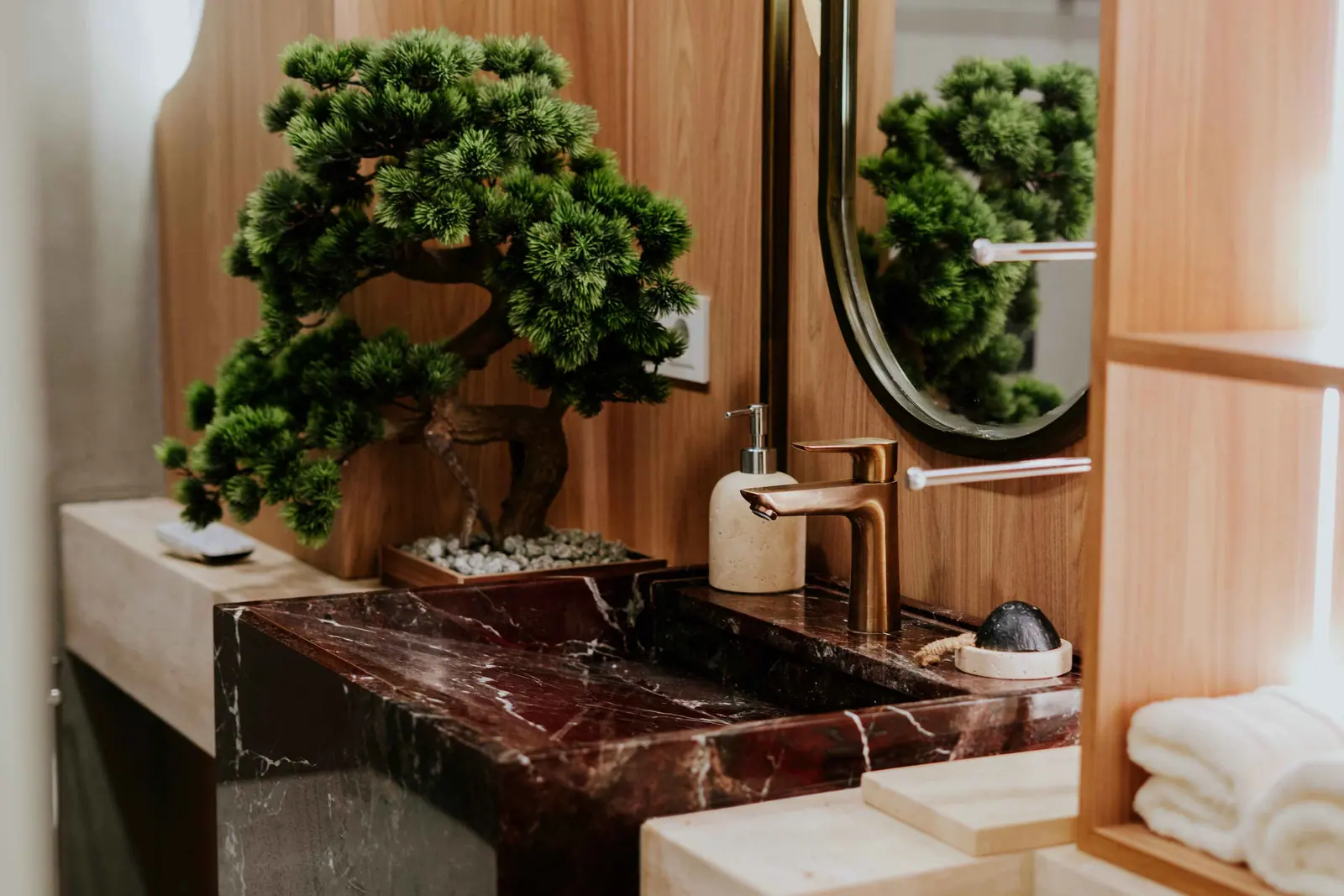
- Bathrooms: walls and vanity tops; floors in honed finish.
- Entrance halls: durable and impressive, with a honed finish near the door.
- Stair treads: with an anti-slip detail near the nosing.
Where to be careful
- Kitchen worktops: beautiful but will etch; accept patina or choose quartz or sintered stone.
- Shower floors: use a textured finish and dense stone.
- Outdoor terraces: choose frost-resistant stones and textured finishes.
- Heavy-traffic commercial areas: dense stones only.
Sealing and care
Sealers reduce the absorption of stains but do not prevent etching. Reseal floors and bathrooms every one to two years and worktops more often. Clean with neutral pH products; avoid vinegar, lemon, bleach and abrasive cleaners. Wipe spills quickly, especially wine, coffee and oil.
Installation matters
Large slabs need a flat, stable substrate and the right adhesive; white marbles need white adhesive to avoid shadowing through the stone. Joints should be tight and consistent, and expansion joints must be planned in large floor areas. Book-matched walls need careful fixing, often with mechanical anchors for heavy slabs.
Marble looks without marble
Large-format porcelain and sintered stone now reproduce marble convincingly, with less maintenance and more consistency. They are a good choice for kitchens, rentals and busy family homes. Many villas combine both: real marble on the feature wall, porcelain on heavy-use floors. We compare them in detail in natural stone vs porcelain floors.
Budget
Marble prices vary enormously with the stone, the slab size and the finish, and waste can be significant with book-matching. Installation of large slabs is also more expensive than tiling. See interior design and renovation costs in Istanbul for how stone affects the overall budget, and villa bathroom design for stone in wet areas.
Frequently asked questions
Is marble suitable for kitchen worktops?
It is possible if you accept patina. Marble is softer than granite or quartz and reacts with acids such as lemon juice and wine, which leave dull marks called etching. Honed finishes hide etching better than polished ones. If you want a pristine surface, choose quartz or sintered stone with a marble look.
What is book-matching?
Book-matching places two consecutive slabs from the same block side by side, mirroring each other like the pages of an open book. It creates a symmetrical pattern and is often used on feature walls, fireplace surrounds and bathroom walls.
How often should marble be sealed?
It depends on the stone and its use. Floors and bathrooms are typically resealed every one to two years, kitchen worktops more often. A simple water-drop test shows when it is time: if water darkens the stone within a few minutes, it needs resealing.