Garden and facade lighting for villas: layers, fittings and control
How to light a villa garden and facade: paths, trees, the facade and pool, fitting types and IP ratings, colour temperature, light pollution and control.
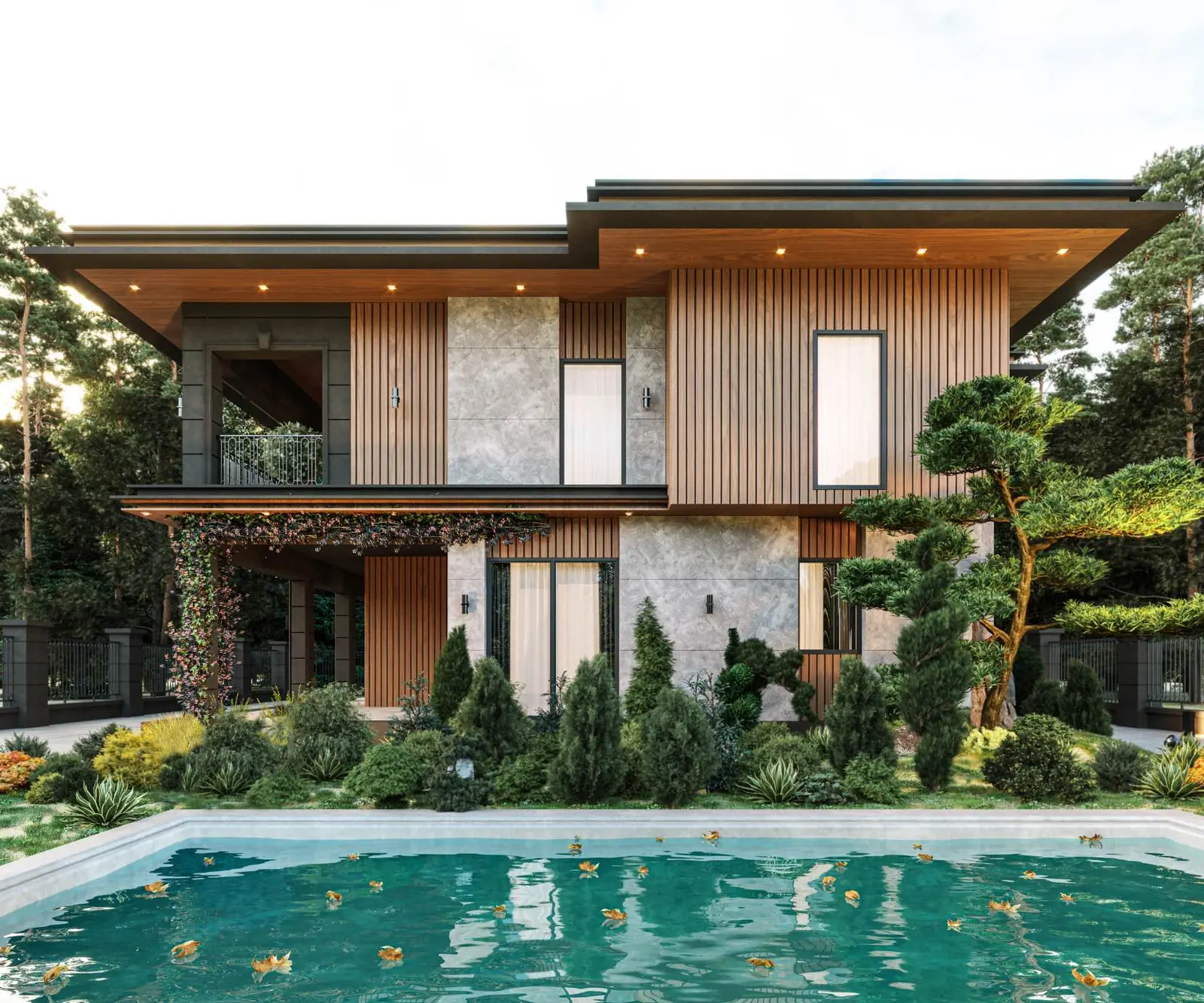
A villa garden at night is either a black mirror in the windows or an extension of the living space. Good outdoor lighting makes the difference: it creates depth from inside, makes paths and steps safe, highlights the architecture and the trees and gives the terrace a pleasant atmosphere for evenings outside. As with interior lighting, it works best in layers and with restraint.
Why it matters from inside
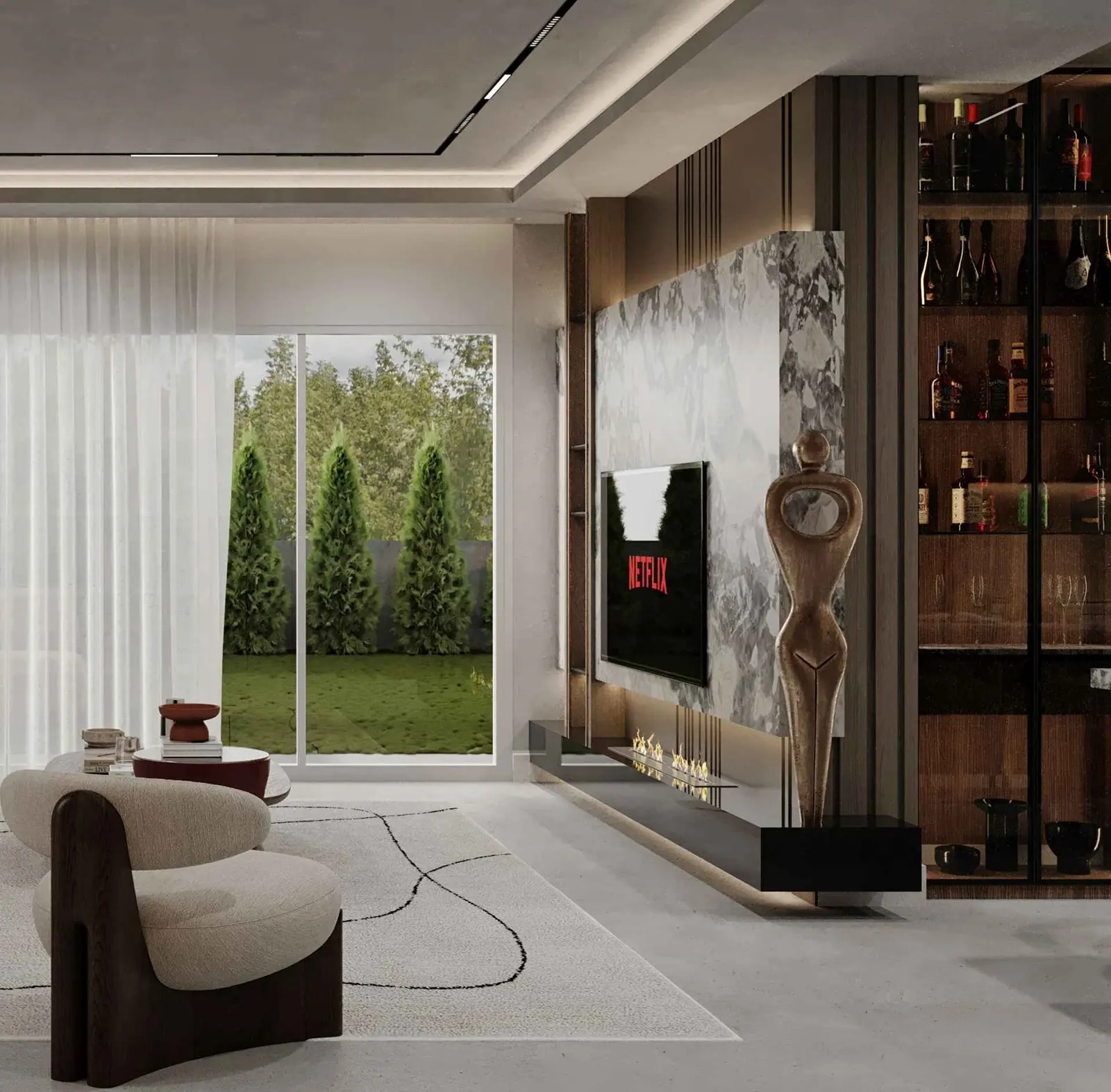
With large glazing, an unlit garden turns windows into dark reflective surfaces at night. A few lit trees, a wall and the edge of the terrace push the view outwards, so the living room feels larger and the garden stays part of the house. Plan outdoor lighting together with the interior, not as an afterthought.
The layers
| Layer | Purpose | Typical fittings |
|---|---|---|
| Facade | Architecture, entrance | Wall washers, uplights, downlights in soffits |
| Paths and steps | Safety, orientation | Bollards, step lights, low path lights |
| Trees and planting | Depth and drama | In-ground uplights, spike spots |
| Terrace | Atmosphere, dining | Wall lights, soffit downlights, festoons |
| Pool and water | Reflection, safety | Underwater lights, edge lights |
| Security | Detection | Motion-sensor floodlights, used sparingly |
Lighting the facade
Wash the facade gently rather than flooding it. Narrow uplights between windows, grazing light on a stone wall or light in a canopy soffit highlight the architecture. Light the entrance clearly with a wall light and a lit house number. Avoid uniform floodlighting, which flattens the facade and creates glare.
Paths and steps
Low-level light is best for paths: bollards or path lights spaced so pools of light overlap slightly. Every step should have a light, either recessed in the wall beside it or under the nosing. Keep the light below eye level to avoid glare.
Trees and planting
Uplighting a few selected trees creates depth and a focal point. One or two in-ground or spike lights per tree, aimed into the canopy, are usually enough. Olive trees, palms and sculptural trees look particularly good lit from below. Leave some areas dark; contrast is what gives a garden drama.
Terraces and outdoor living
On terraces, light should feel like an interior: warm wall lights, dimmable downlights in a pergola or soffit, and table lamps or lanterns. Avoid bright floodlights here; they attract insects and ruin the atmosphere.
Pools
Underwater lights make a pool a glowing feature at night. Warm white suits most villas; colour-changing lights should be used carefully. All pool lighting must meet the strictest safety requirements and be installed by qualified electricians.
Fittings and ratings
- IP65 or better for exposed fittings; IP67 for in-ground; IP68 underwater.
- Marine-grade stainless steel, bronze or coated aluminium for durability.
- Glare shields and adjustable heads to aim light precisely.
- Low-voltage systems where possible for safety and flexibility.
Control
- Astronomical timers so lights follow sunset
- Scenes: evening, dinner outside, late night, off
- Motion sensors for paths and security lights only
- Integration with the interior lighting control
Our guide to lighting control and smart home covers how to connect outdoor and indoor scenes.
Respecting the night
Keep light where it is needed. Aim fittings downwards or at features, avoid lighting the sky or neighbours, and dim or switch off after a certain hour. Good outdoor lighting feels subtle, not bright.
For glazed garden rooms, see winter garden design. The view from the living room is discussed in villa living room design, and planning a villa renovation more broadly in renovating a villa in Istanbul as a foreign owner.
Frequently asked questions
What IP rating do outdoor lights need?
Wall and ceiling fittings exposed to rain should be at least IP44, and preferably IP65. In-ground uplights need IP67, and fittings in pools or fountains IP68. Fittings in coastal areas also need corrosion-resistant materials such as marine-grade stainless steel or coated aluminium.
What colour temperature suits outdoor lighting?
Warm white around 2700-3000 K for the facade, terraces and paths, as it feels welcoming and matches interior light. Cooler light can bring out the green of foliage, but should be used sparingly.
How can garden lighting avoid disturbing neighbours?
Use shielded fittings aimed downwards or at specific features, avoid pointing lights towards neighbours or the sky, keep levels low and switch lights off or dim them late at night with timers.